Business Growth Architecture

Strategy. Transformation. Growth.

Business growth doesn’t happen by chance. It is designed.

We help CEOs and business leaders identify and activate the strategic engines that drive growth, profitability, and transformation.

The way businesses are built and grown has changed.

For years, businesses were built around products and services.
Then came the era of strategy, processes, and technology.

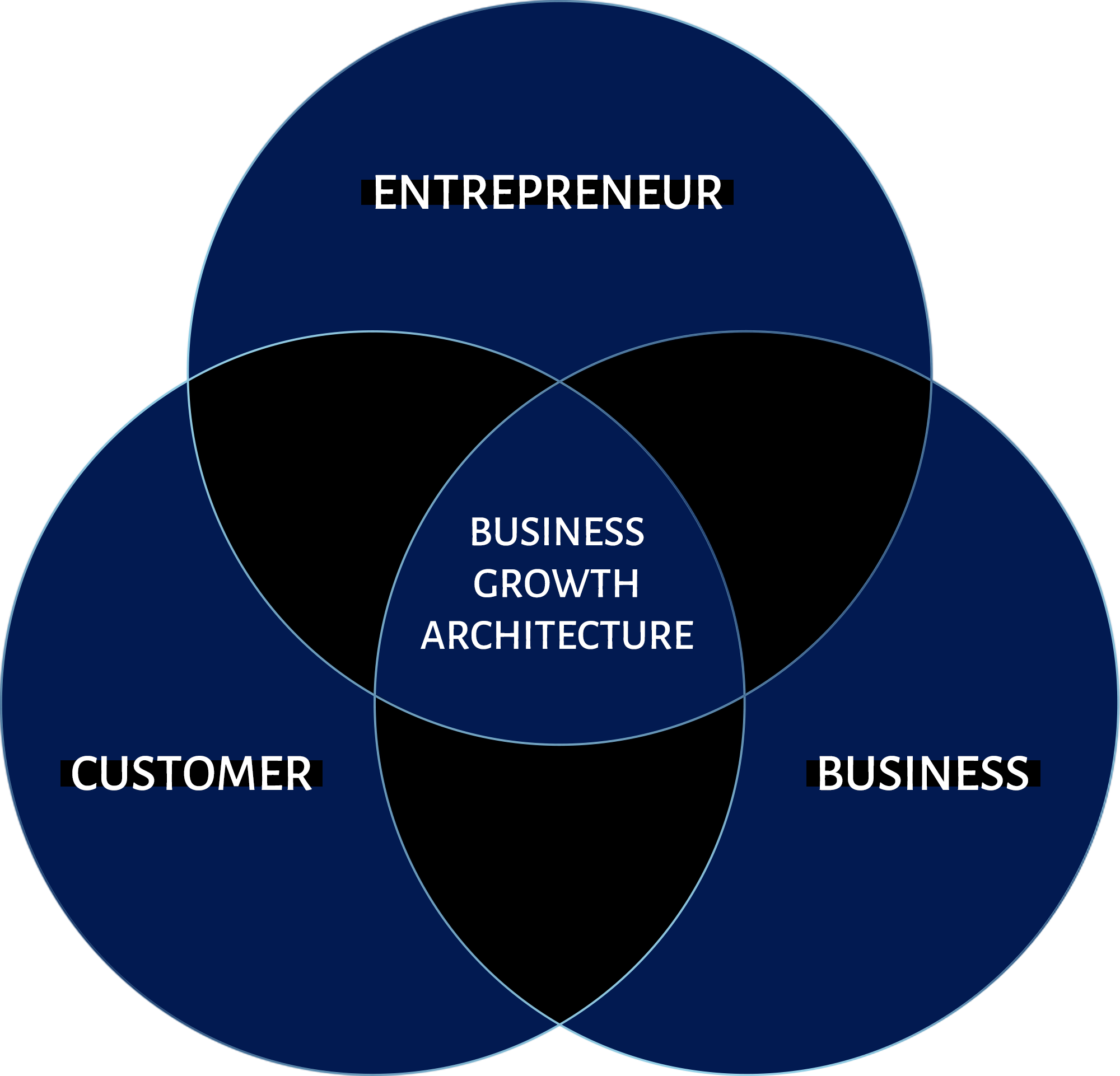
Today, however, successful businesses are built at the intersection of three forces:

  1. The Customer
    (Understanding people deeply—their needs, behaviors, and experiences.)
  2. The Business
    (Thoughtfully designing the business model, competitive advantage, and engines of value creation.)
  3. The Entrepreneur
    (Empowering the leaders and entrepreneurs who must envision the future, make decisions, and move the organization forward.)

We believe sustainable growth lies in connecting these three worlds. This philosophy is the foundation of Business Growth Architecture.

This is where businesses are viewed
through the lens of strategic architecture.

Over more than a decade of professional experience, I have worked with large companies, holding groups, and growing startups to identify and activate the key levers of growth, profitability, and transformation.
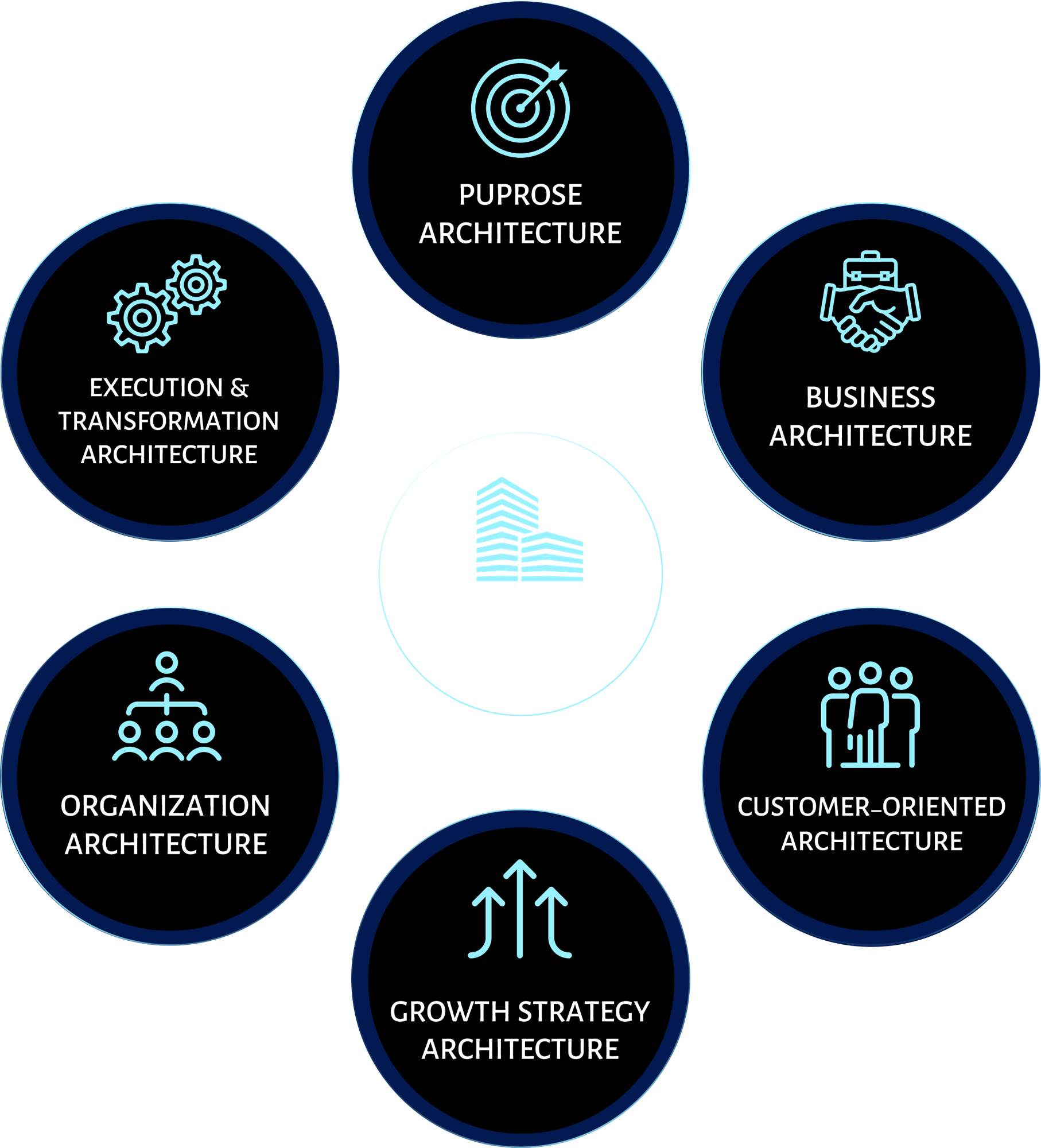
My approach brings together business architecture, growth strategy, business model design, transformation, and the design of growth engines.

Business Growth Architect

Statistics
& Experiences

+ 128
Businesses
+ 260
Growth & Transformation Projects
+ 1200
C-Suite Executives & Board Members

Business Challenge

How do we grow our business? Purposeful growth with a high degree of confidence.

The Business Growth Architecture framework, where vision serves as the focal point, aligning every strategic and operational choice to unlock the organization’s potential for growth, profitability, and value creation.

Seeing growth translated into measurable revenue outcomes for every defined action.
This approach requires three essential conditions: the willingness to change, the courage to make bold interventions, and the commitment to go the extra mile for growth.

Business Growth Architecture

Sustainable growth is not a matter of luck, working harder, or simply executing a handful of projects. It is the result of intelligently and holistically designing every component of the business within a coherent architecture.

Business Growth Architecture means:
Designing an integrated system in which every part of the organization works in alignment and continuously evolves to create greater value for customers and stakeholders.

Business Innovation
Laboratory

Before investing in new ideas and growth opportunities, design, evaluate, and test them.
At the Business Innovation Lab, business models, revenue engines, growth opportunities, and future scenarios are rigorously assessed by a network of expert strategists—helping you make decisions with lower risk and a higher probability of success.

New Business Insights

Frequently Asked Questions


Why do so many growth initiatives fail to translate into real business growth?

Because most organizations invest in projects, not in growth levers.
An organization may undertake dozens of transformation, digital, sales, or HR initiatives, yet none of them may have a meaningful impact on growth or profitability.
In Business Growth Architecture, every development initiative must demonstrate its impact on a key business outcome—such as revenue growth, profitability, value creation, or competitive advantage.
The measure of success is not the number of projects. It is Growth ROI—the return on investment in growth.


What Is Business Growth Architecture?

Business Growth Architecture is a holistic approach to designing and developing an organization. Rather than focusing on a single function—such as strategy, sales, or digital transformation—it designs the entire growth system.
This approach integrates and develops three core dimensions:

  • Customer
  • Business
  • Entrepreneur & Leadership Team

The ultimate goal is to create growth that is sustainable, profitable, and scalable. The outcome is an actionable growth architecture that gives the CEO clarity on:

  • which growth engines matter most to the organization;
  • where resources should be focused;
  • which activities have little or no strategic value and should be eliminated;
  • how innovation can be translated into profitable growth; and
  • how to prepare the business for the future of its market and technology.

What’s the Difference Between Business Growth Architecture and Management Consulting?

Most consulting engagements focus on solving a specific business problem—such as strategy, organizational structure, sales, or digital transformation.
Business Growth Architecture, however, is about designing the organization’s entire growth system.
Instead of asking:
What should we do?
We first ask:
Which decision will create the greatest economic value for this business?


How Do You Ensure That Decisions Actually Create Value?

We examine every business challenge through a strategic lens.
This means every decision must answer five questions:

  • Does it create value for the customer?
  • Does it strengthen competitive advantage?
  • Does it improve profitability?
  • Does it make the organization more scalable?
  • Will it continue to deliver an advantage in the future?

Does Rapid Growth Always Mean Sustainable Growth?

No. Growth without architecture often creates greater complexity, costs, and dependencies.
Our goal is not simply rapid growth, but agile, intelligent, and sustainable growth—growth that creates maximum value with minimal resource waste while preparing the organization for its next stage of development.


Are These Services Suitable for Startups and Small Businesses?

Yes, but the nature of the engagement will be different, with a greater focus on:

  • Business model design
  • Opportunity validation
  • Revenue engines
  • Scalability
  • Growth roadmap design

How Do You Architect Your Business for the Age of AI?

In the past, competitive advantage was largely built on capital, human resources, production scale, or market access. Today, competitive advantage is rapidly shifting toward the ability to learn, make intelligent decisions, and innovate continuously.
In the age of AI, market share will no longer belong to companies that simply work harder; it will belong to companies that are designed to be smarter.
Within the Business Growth Architecture approach, AI is not a technology project—it is part of designing the organization’s future.
We examine how AI can transform the business model, customer experience, decision-making processes, and growth engines, enabling the organization not only to adapt to change, but to turn change into a source of competitive advantage.


How Do You Ensure Resources Are Allocated to the Right Priorities?

One of the core principles of this approach is focused growth. Before taking action, the organization’s most important growth engines, bottlenecks, and value-creation opportunities are identified. The goal is not to do more. It is to ensure that the organization’s capital, time, and energy are focused precisely on the actions that will have the greatest impact on the future of the business.


What Role Does Innovation Play in Your Approach?

We do not see innovation simply as the development of new products or services.
The greatest growth opportunities often lie in business model innovation.
Innovation can take place across the entire business system—from the business model and revenue model to customer experience, sales channels, value chains, partner ecosystems, technology, and leadership or management models.


Why Is the Entrepreneur One of the Three Core Dimensions in Your Model?

Because no organization grows faster than its leader.
Many growth constraints lie not in the market or in available resources, but in the way decisions are made, priorities are set, and organizations are led.
That is why, alongside the customer and the business, developing leadership capacity and an entrepreneurial mindset is an integral part of Business Growth Architecture.


How Do Projects Get Started?

Simply submit your request through the consultation request form or the contact information provided on the website.
After an initial review, we will schedule a meeting to get to know each other, understand your needs, and assess the potential for collaboration.
During this meeting, we will discuss:

  • The organization’s current situation
  • Growth objectives
  • Key challenges
  • Development opportunities

If there is a good fit, we will then propose a framework for collaboration.


If You Had to Name Just One Defining Feature of Your Approach, What Would It Be?

Strategic focus.
Most organizations spread their resources across dozens of projects. We focus on identifying the most critical growth lever—the point where investment can generate the greatest return.
Sustainable growth rarely comes from doing more. It comes from doing what matters most.